
Why Do My Nails Keep Peeling, Splitting & Breaking?
·
·
What Your Nails Might Be Trying To Tell You
If your nails seem to break the second they finally start looking good, we need to talk.
You spend weeks growing them out, everything is going perfectly, and then one tiny snag turns into a split, a peel, or a broken nail. Suddenly, you are back to square one wondering why your nails just refuse to cooperate.
Before you blame your genetics or order every nail strengthener on the internet, the problem might be hiding in your everyday routine.
From washing dishes to picking off polish, some of the smallest habits can put more stress on our nails than we realize. So, if your nails are constantly peeling, splitting, or breaking, let’s figure out what might actually be going on and what you can do about it.
First, What Do We Mean By “Weak Nails”?
We tend to throw peeling, splitting, bending, and breaking into one big category: weak nails. But they are not always exactly the same thing.
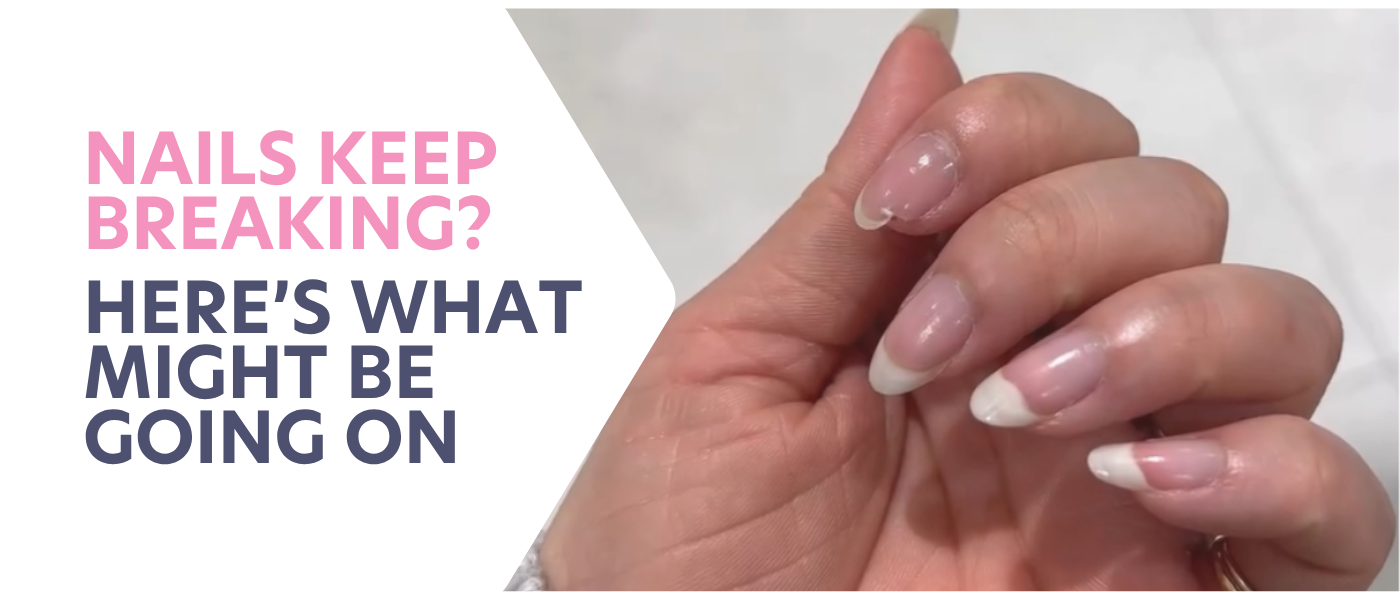
Peeling happens when thin layers of the nail begin separating, often near the tips.
Splitting is when a crack develops through part of the nail.
Breaking usually happens when part of the nail snaps or tears away after getting caught, bent, or bumped.
Brittle nails can become soft and peel when they are exposed to too much moisture, while repeated trauma can also contribute to splitting and softening.
The important thing to remember is that having nails that peel or break does not automatically mean you are doing something terribly wrong. Sometimes, they simply need a little more protection from everything our hands go through each day.
So, Why Are Your Nails Peeling, Splitting Or Breaking?

There is not always one obvious culprit. In fact, a few surprisingly normal parts of your routine could be contributing to the problem.
1. Your Nails Spend A Lot Of Time In Water
We know washing your hands and doing the dishes are not exactly optional.
But repeated or prolonged exposure to water can weaken your nails, making them more likely to peel, split, or break. If you are constantly washing your hands, swimming, cleaning, or spending a little too long in your showers, your nails may need some extra care.
Using gloves would provide an easy and effective barrier between your nails and all that water and cleaning product exposure.
Not glamorous, we know. But your nails will appreciate it anyway.
2. You Are Using Your Nails As Tools
Be honest. Have you ever used your nails to peel off a sticker, open a package, scrape something off a surface, or attack the tab on a soda can?
We see you.
Your nails are many things. A box cutter is not one of them.
Repeated trauma can contribute to splitting and softening of the nail, so all those tiny everyday moments can eventually add up.
As convenient as your nails may be, reach for an actual tool instead. Keeping a small package opener on your keychain can save your nails from doing the job.
3. You Are Picking Or Peeling Off Your Manicure
We have already had this conversation with our gel lovers, but it is worth repeating: please stop peeling your manicure off.
Picking, peeling, or aggressively filing away nail products can remove layers from the natural nail along with them. Gel and artificial nail manicures can contribute to brittleness, peeling, and cracking, particularly when removal is hard on the natural nail.
That tiny lifted corner might be tempting, but trust us on this one, leave it alone and remove your manicure properly.
4. You May Be Doing A Little Too Much Filing & Buffing
More filing does not always mean better filing.
Aggressively filing the surface of your natural nail can leave it thinner and more vulnerable. The same goes for constantly buffing an already delicate nail in an attempt to make it look smoother.
Instead, focus your filing on maintaining your shape and gently smoothing rough edges before they turn into bigger snags.
Notice one corner starting to catch on your sweater? That is your sign to grab your nail file and not your invitation to start picking at it.
5. Your Nails Might Need More Moisture
We moisturize our face. We moisturize our hands. Our nails and cuticles deserve a little attention too.
Dry nails can split more easily, which is why dermatologists recommend working hand lotion into the nails and cuticles as part of your regular routine. Applying a cuticle oil, like Bona Fide Beauty’s Hydrate & Nourish Cuticle Oil Pen, can make moisturizing your nails and cuticles an easy part of your routine.
It does not need to become another complicated step in your day. Keep a hand cream or cuticle oil somewhere you will actually use it. That can be beside your bed, at your desk, or in your purse.
6. Your Nail Length Might Not Match Your Everyday Routine
Long nails can be beautiful, but sometimes your dream length and your daily routine are having a disagreement.
Typing, working out, cooking, cleaning, opening packages, playing sports, and everything else our hands somehow accomplish in a day can create plenty of opportunities for longer edges to get bumped or caught.
That does not mean you have to give up long nails forever. But if your nails keep breaking at the same length, temporarily keeping them a little shorter may make them easier to maintain while the damaged areas grow out.
7. Ignoring Breaks In Your Nails
That tiny rough edge may not seem like a big deal... until it catches on your sweater.
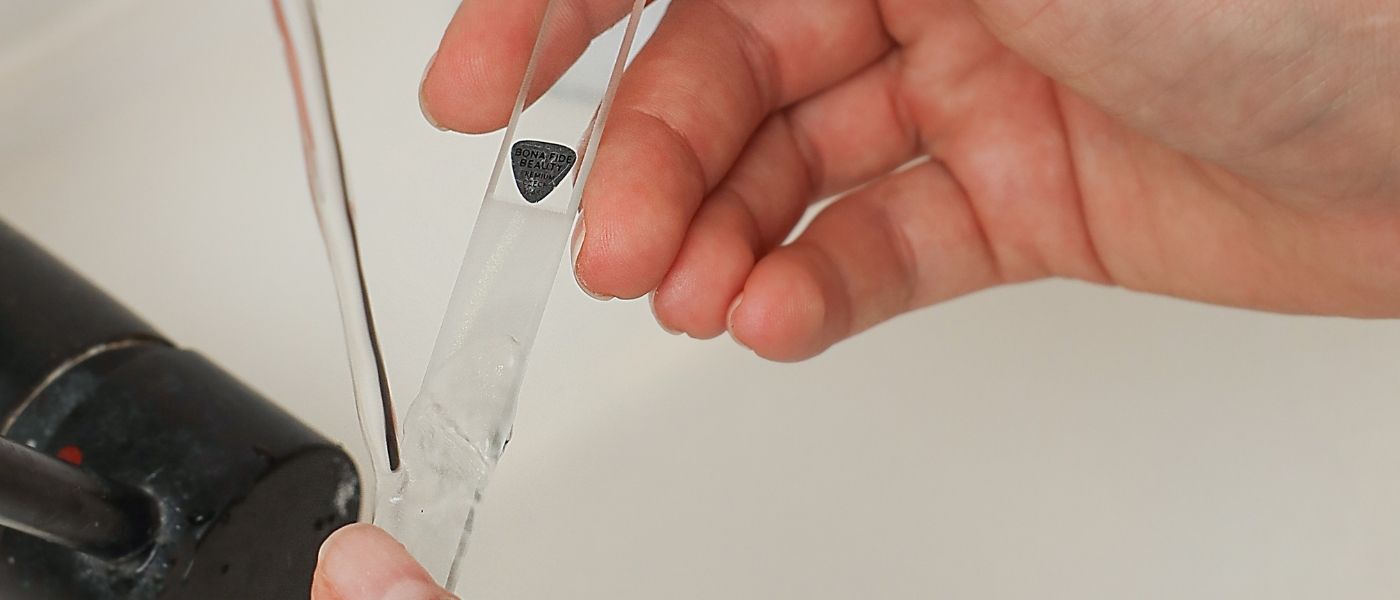
Use a fine-grit nail file like the Bona Fide Beauty Czech Glass Nail File to gently smooth rough or uneven edges before they have the chance to turn into a larger split.
No need to aggressively file. The goal is to create a smooth, comfortable edge.
Before You Blame Your Vitamins...
We have all seen the hair, skin, and nail supplements promising longer and stronger nails, but brittle nails do not automatically mean you are missing a vitamin.
Some research suggests biotin may help strengthen weak or brittle nails, but it is not something everyone necessarily needs. Before starting supplements, it is also worth knowing that high amounts of biotin can interfere with certain laboratory tests and cause incorrect results.
If you are worried that nutrition or another health concern may be contributing to changes in your nails, check in with a qualified healthcare professional instead of trying to diagnose it from your manicure.
How Long Does It Take For Damaged Nails To Improve?
Here is the frustrating part: nail care takes time.
Once part of your nail is damaged, moisturizing it for three nights is not going to magically make that section brand new again. The damaged area gradually has to grow forward until it can eventually be trimmed or filed away.
A fingernail can take around six months or longer to fully grow out, so visible improvement is often a journey rather than an overnight transformation.
We know patience is not nearly as exciting as a miracle nail treatment. But this is where small, consistent habits matter.
Protect the nail you have while giving new growth time to come in.


When It Might Be More Than Everyday Nail Damage
Most of us will deal with an occasional broken or peeling nail at some point. However, persistent or unusual changes deserve a little more attention.
Changes such as significant discolouration, thickening, crumbling, lifting away from the nail bed, or changes that continue to worsen can sometimes be associated with an infection or another nail condition.
If something about your nails suddenly looks or feels very different, becomes painful, or does not seem to improve with gentle care, check in with a qualified healthcare professional.
Strong Nails Start With Small Habits
When your nails keep peeling, splitting, or breaking, it is easy to feel like you just have “bad weak nails.” But sometimes the answer is not another quick fix, it is noticing the little things your hands go through every day.
Smooth the snag before you pick it. Put on the gloves before doing the dishes. Moisturize after washing your hands. And please, for the love of your nails, stop using them to open packages.
Your nail journey does not have to be perfect. A few small, consistent habits can go a long way toward helping your natural nails feel cared for while giving damaged areas time to grow out.
Take your time, be gentle with your nails, and enjoy the small moments of care along the way.
You got this!

Comments